
.jpg)
“I consider social sustainability the mother of all sustainabilities,” says Burkinabé-German architect Francis Kéré. It is perhaps the clearest way to understand the thinking behind his work, which spans a remarkable range of scales and contexts – from community infrastructure built for and with the people of rural Burkina Faso to striking cultural commissions across the Western world.
.jpg)
Over the decades, he has received much acclaim for a humanitarian approach to architecture that is inseparable from its climate, its materials and the local knowledge embedded in a place, gaining international recognition first with the 2004 Aga Khan Award for Architecture, then becoming the first African architect to receive the Pritzker Prize in 2022. Along the way, his work has profoundly reshaped a global conversation about what architecture is for: prompting a rethink of how structures are sourced and built, training a new generation of architects in Burkina Faso and also inspiring what critics have called an African renaissance of architecture.
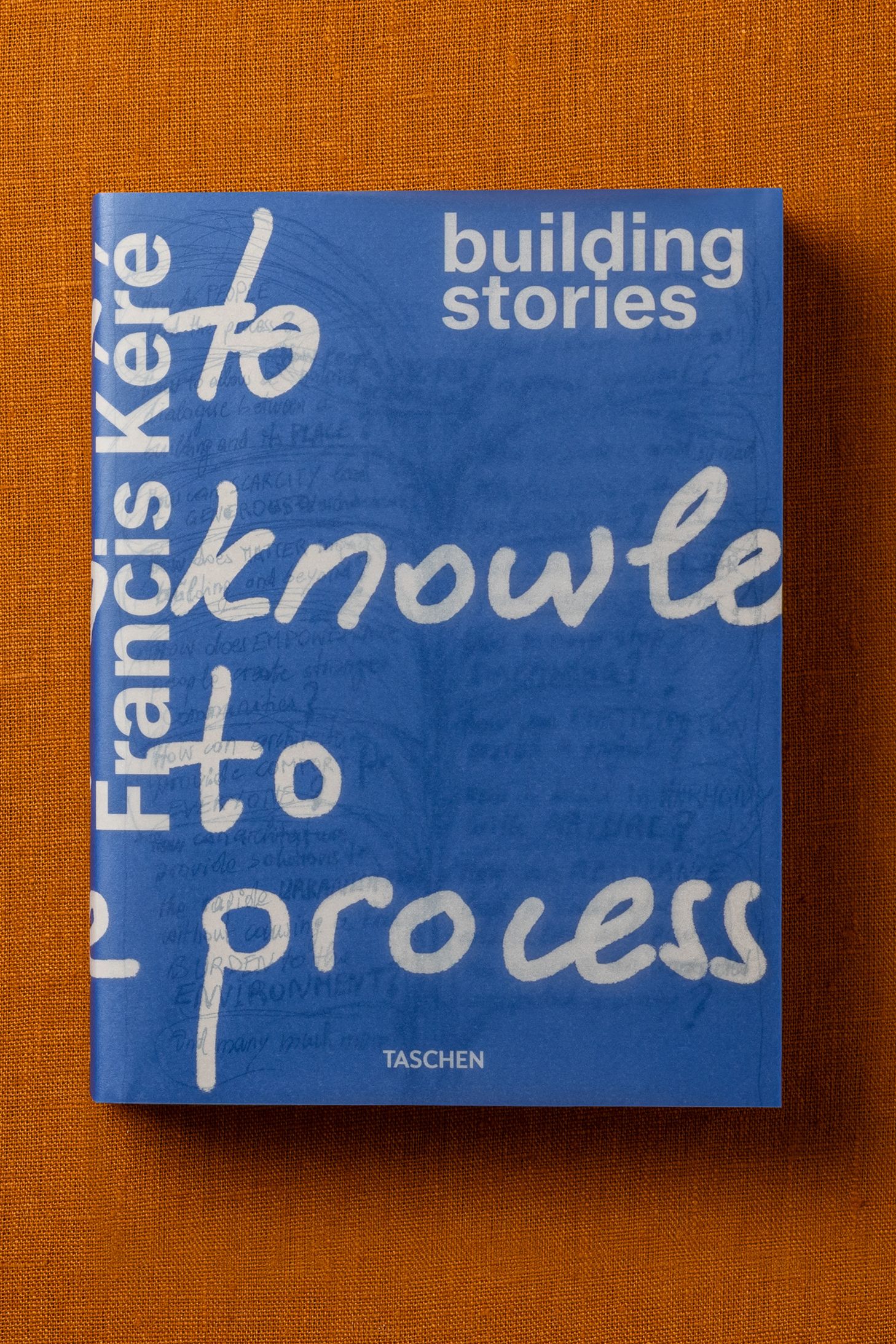
His recently published Taschen monograph, Francis Kéré: Building Stories, offers a more personal window into that trajectory – working through his creative processes, the collaborators who impacted his thinking along the way and the values that have accumulated across a career of building with and for communities – in his own words and through sketches, memories and note-like reflections.
Here's a look at eight projects that trace the arc of his innovative people-first thinking.
1. Gando Primary School, Gando, Burkina Faso (2001)
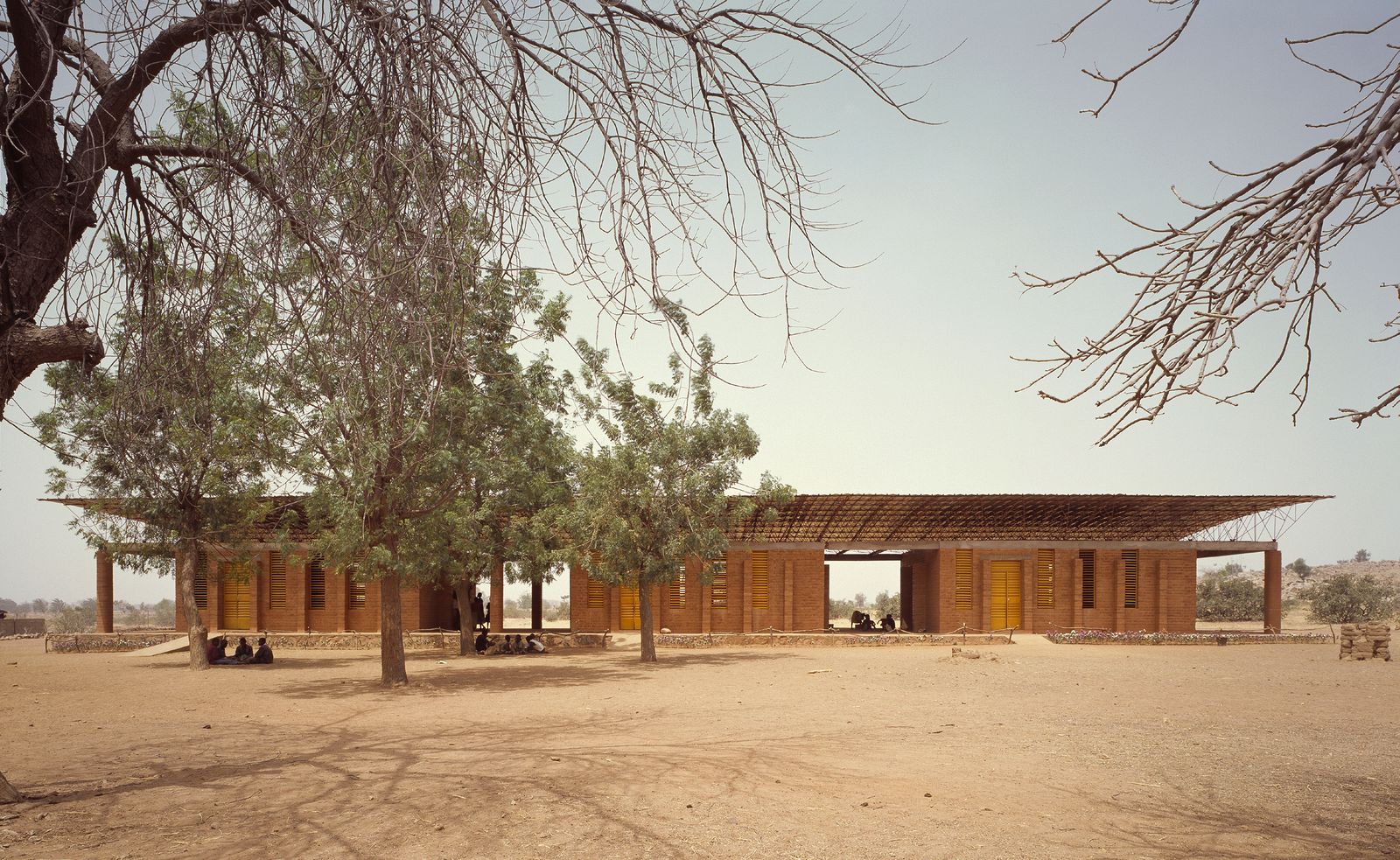
Kéré’s practice began with a simple desire to give back to his community, and so it is fitting that the origins of his practice lie in his native village.
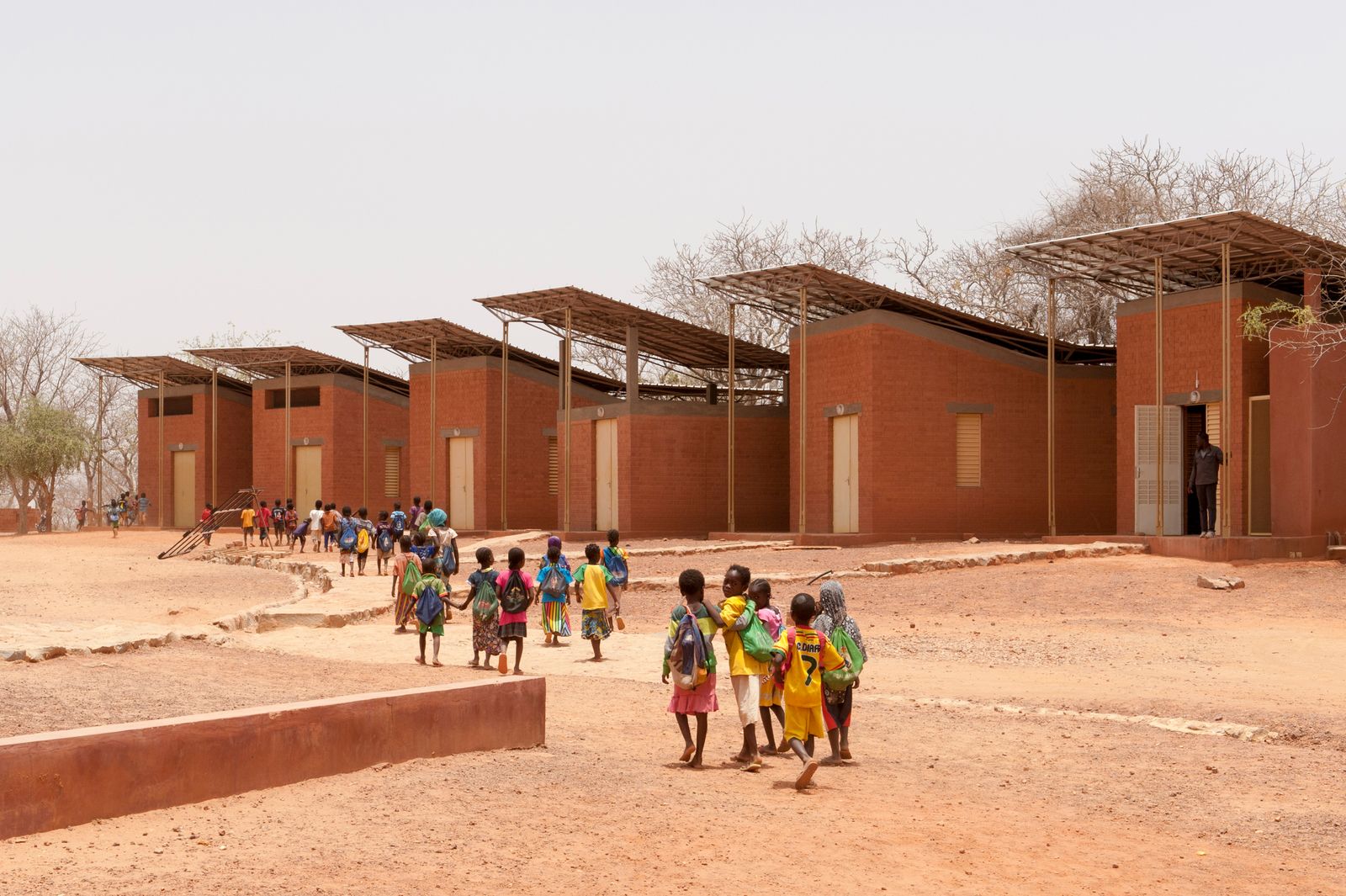
The design came about from a tension between an association of concrete and glass with progress, and the dismissal of earth as fragile or primitive. He avoided both positions and developed, he says, an “honest” building that “mimicked neither Western modernity nor Burkinabe vernacularity, but that just naturally expressed its function”. The defining move is the roof, a corrugated metal canopy lifting off the compressed earth walls and creating a ventilated cavity that draws hot air out while allowing cooler air to circulate through the classrooms without any mechanical systems.
The primary school laid the foundations of Kéré’s socially driven and climatically responsive approach, and built with the village community, it also became a testing ground for the participatory construction methods and local knowledge-sharing processes that would go on to shape his oeuvre.
2. Opera Village, Laongo, Burkina Faso (2010-ongoing)
An initial ambition to build an opera house was diverted when the selected site was devastated by floods in 2009, leaving hundreds of thousands of locals displaced. To support those affected by the tragedy, the team turned towards a growing infrastructural model – an opera village.
Working with theatre director Christoph Schlingensief, Kéré recalls being inspired by his sensorial approach to dramaturgy – where sequences and movement become central to the spatial experience – apparent in the village’s radial plan anchored by a eucalyptus stick-wrapped theatre. Around it, along a spiral, are modular dwellings, classrooms, workshops, public spaces and health clinics.
3. Kamwokya Community Centre, Kampala, Uganda (2016-2022)
-4.jpg)
The swampy ground housing the informal settlement was already buzzing with life when Kéré arrived, though lacking in basic infrastructure, and his approach sought to support its “fragile balance that had been reached through years of cohabitation.”
The entire site was lifted onto a raised platform with draining paving systems that stabilised what had previously been muddy and flood-prone terrain, with subtly stepped levels allowing different activities to happen simultaneously around a central sports field edged by informal seating.
Two butterfly-shaped roofs shelter the centre, and inside are spaces including a music studio, gym, internet café and community hall, but Kéré was equally interested in the life unfolding around and between them. He describes teenagers gathering there after sunset to do homework under solar-powered lighting because they have no electricity at home, while dancers rehearse with the hall opened directly onto the public space outside, and professional teams come to practice.
4. Serpentine Pavilion, London, UK (2017)
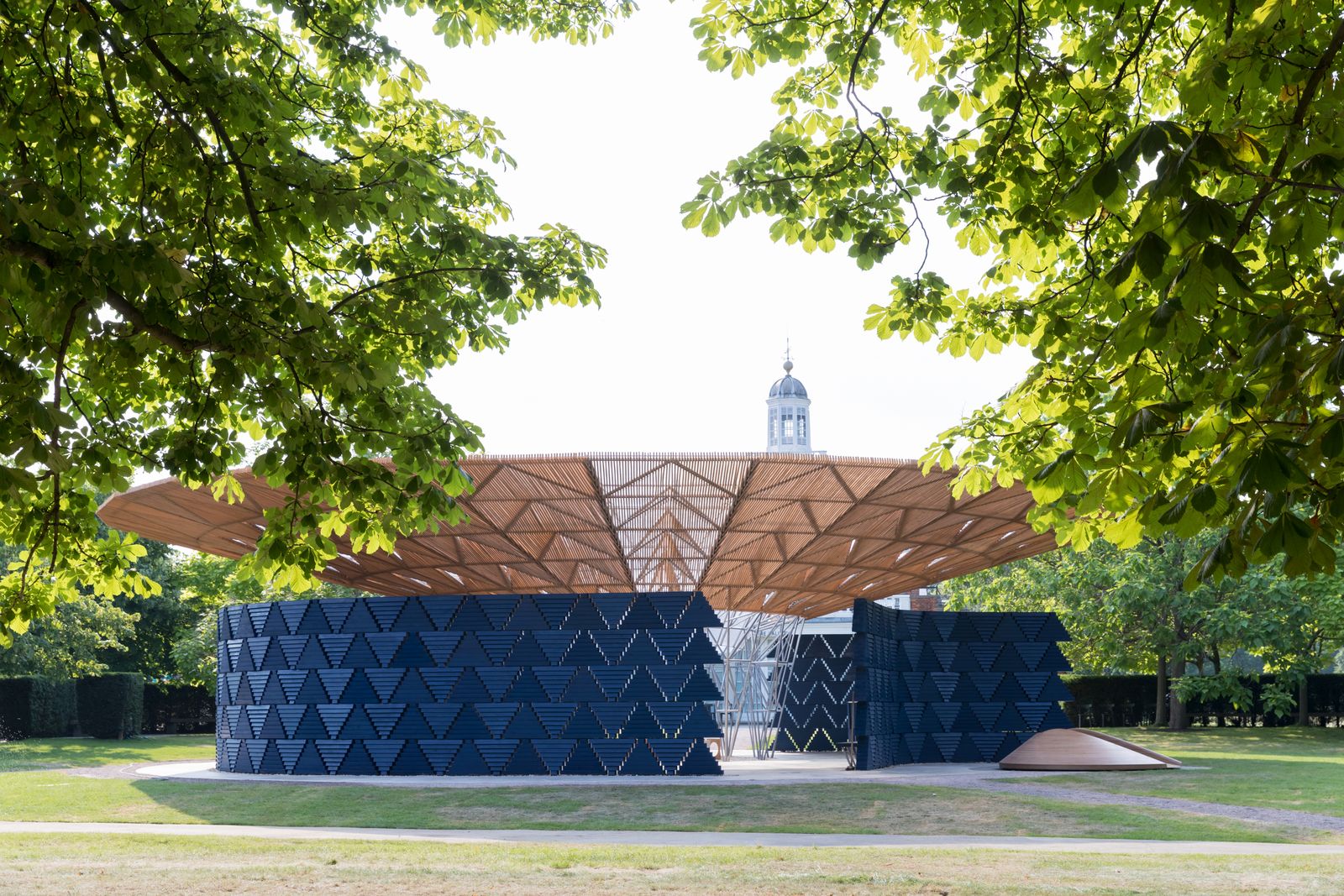
Much of Kéré’s work has directly considered very specific community needs across Africa, but he has also spent recent years asking how those same values can translate to different climatic, economic and social contexts. He began testing this through a series of pavilions, most notably at the Serpentine, which started with a simple question: “What does an ephemeral pavilion in a park in central London need?” His answer was equally direct – a place where people from different backgrounds could gather without barriers.
The pavilion is organised around a central courtyard enclosed by indigo-blue timber “bricks” that reference both London’s traditional architecture and the compressed earth block construction of his African projects. In the centre, a large, latticed canopy opens to the sky – drawing from the tree in his village where people gathered at the end of the day – with the oculus collecting rainwater while casting shade below.
5. Startup Lions Campus, Turkana, Kenya (2019-2021)
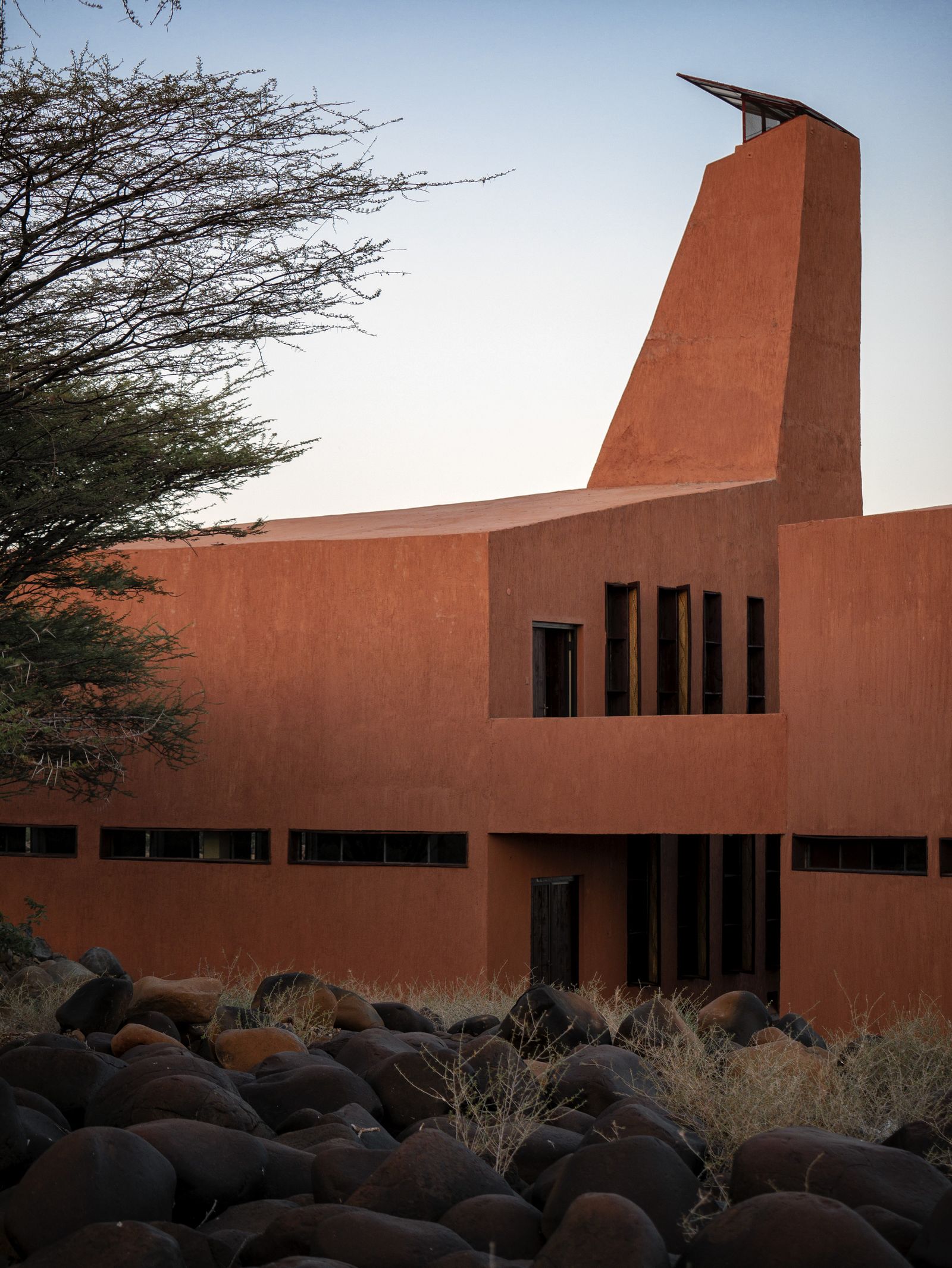
Kéré recalls the dry landscape’s scattered termite mounds and their sophisticated internal ventilation systems (which regulate temperature through networks of tunnels and air channels) as the environmental starting point for the project. “Is this not a proper technological and social knowledge from which to learn?” he considered.
The digital education campus’s tall ventilation towers draw from these natural structures, while also nodding to the ancient wind catchers of North Africa and West Asia that pull hot air out of the interiors. Built from locally quarried stone, the buildings are also fitted with woven straw screens developed using local weaving techniques, filtering dust and sunlight while allowing air to circulate naturally.
6. Las Vegas Museum of Art, USA (ongoing)
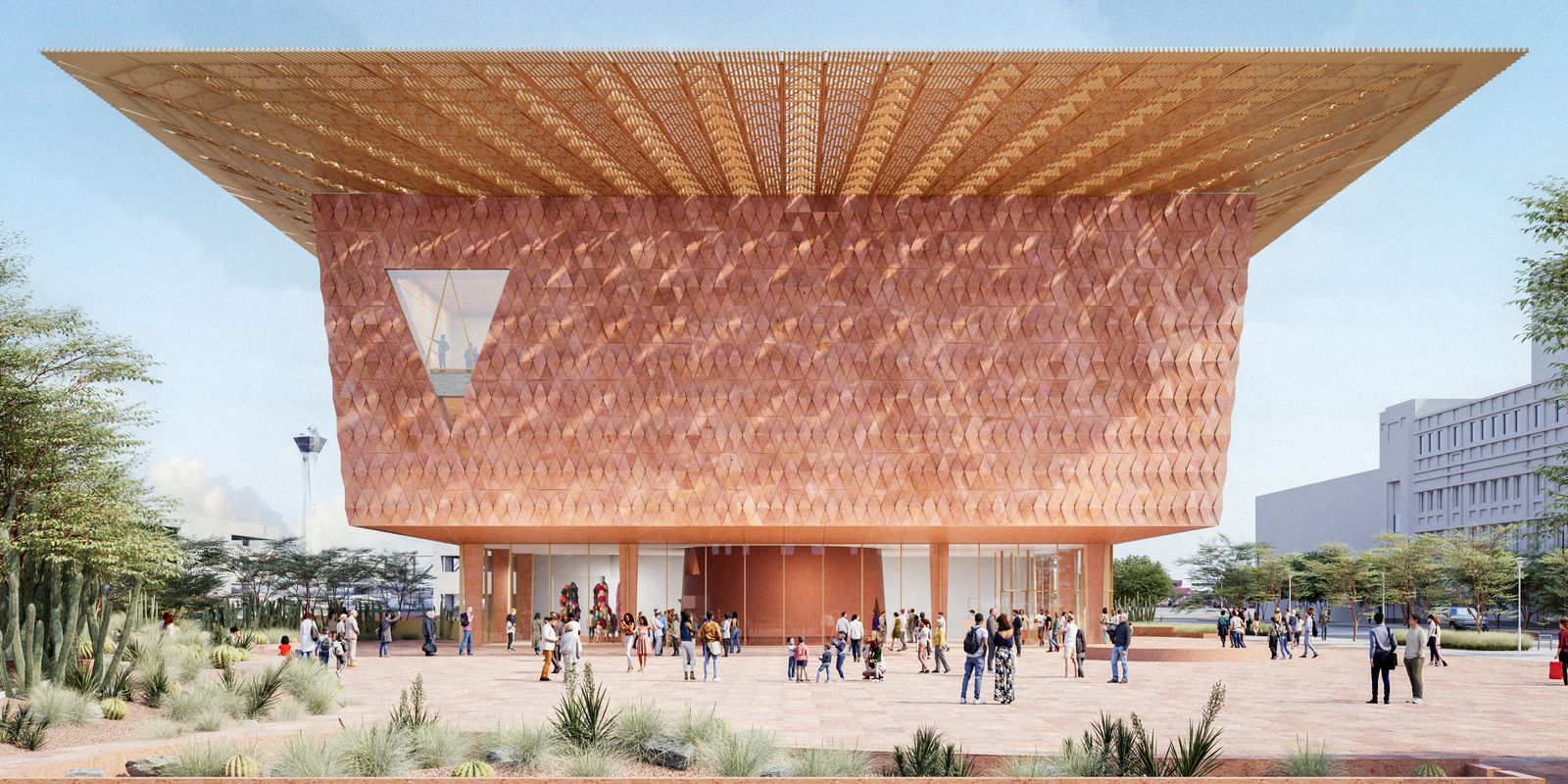
A spectacle of casinos and glittering neon, Las Vegas might seem far removed from the kinds of places usually associated with Kéré’s work, but he reflects on the city with surprising familiarity. The surrounding Mojave Desert landscape reminded him of Burkina Faso’s extreme climate, in which shade and communal life also take on particular importance. He was also struck by the landscape’s geological fault lines and rock formations, while returning to a familiar image in his own work: the tree as a place of conviviality.
Those references come together in the art museum organised around a central void called “The Canyon”, which draws indirect light into the galleries while helping to cool the interiors through passive ventilation. Exhibition spaces are lifted above a shaded public plaza intended as an open gathering space, while a textured outer facade filters light and heat in the manner of a protective second skin.
7. Thomas Sankara Memorial, Ouagadougou, Burkina Faso (2023-ongoing)
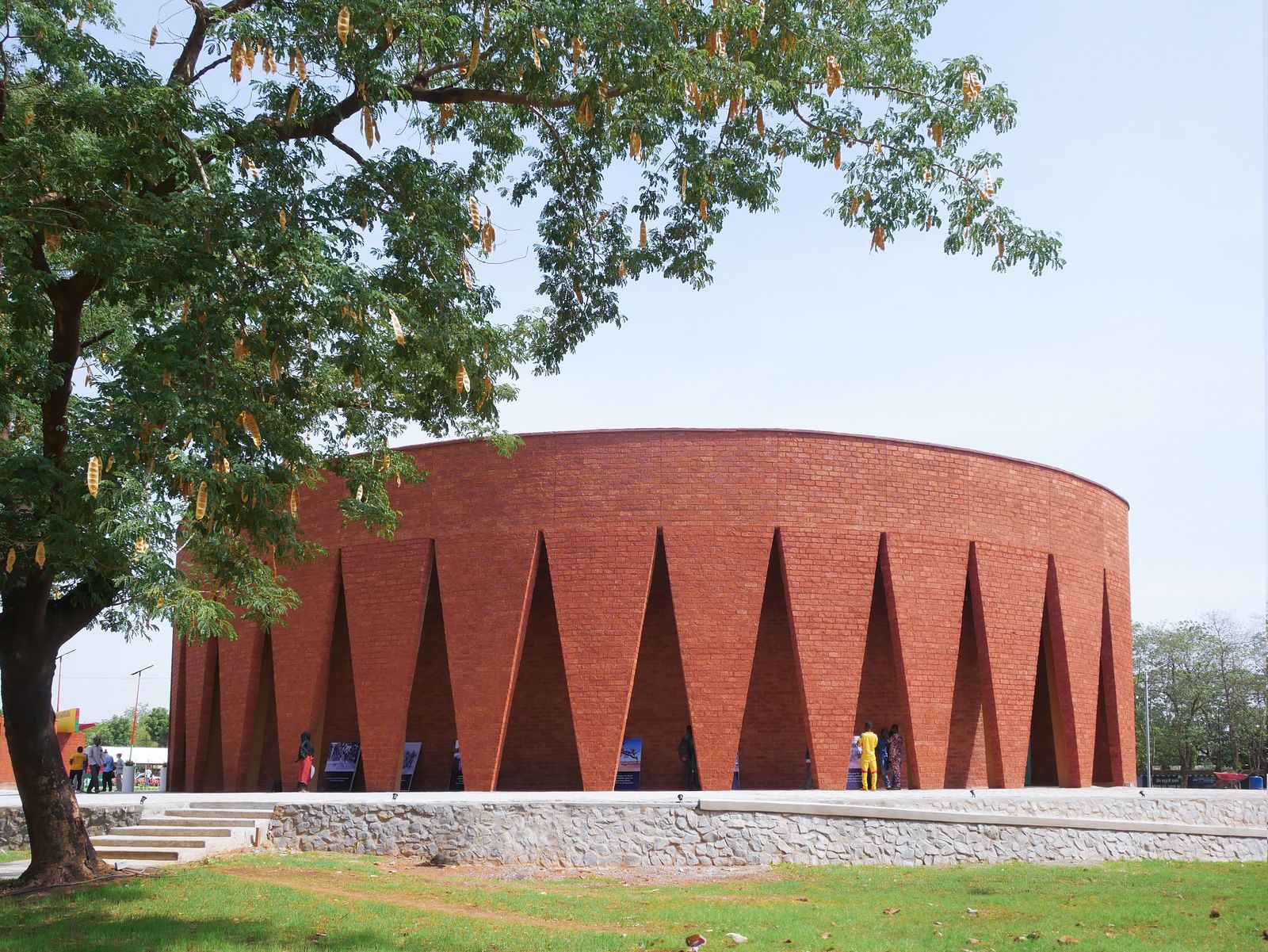
In the monograph, Kéré repeatedly mentions his respect for Thomas Sankara, Burkina Faso’s revolutionary former president. “I believe this vision permeated my entire education and is one of the founding principles of my work,” he reflects, linking Sankara’s belief that Africa already possessed the resources, knowledge and people needed to build for itself, to his own commitment to working with localities and community-building processes.
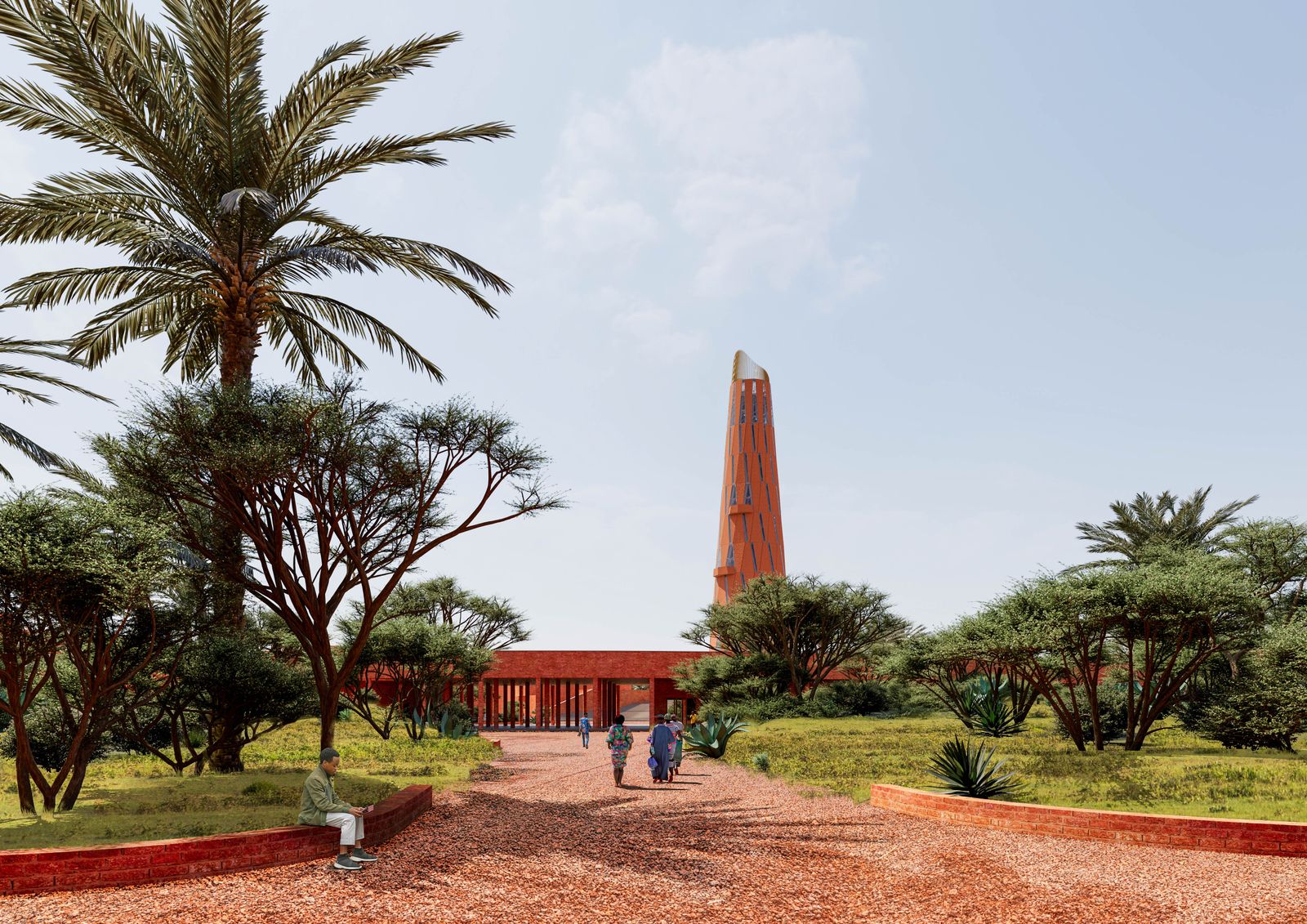
The Thomas Sankara Memorial sits on the site where Sankara and his companions were assassinated, and a 100-metre spiralling tower rises as a new landmark for Ouagadougou, surrounded by a broader programme including the recently-completed mausoleum with curved walls made of naturally ventilating compressed earth and laterite, and a domed interior filtering light onto the tombs below.
8. Burkina Faso National Assembly (unbuilt)
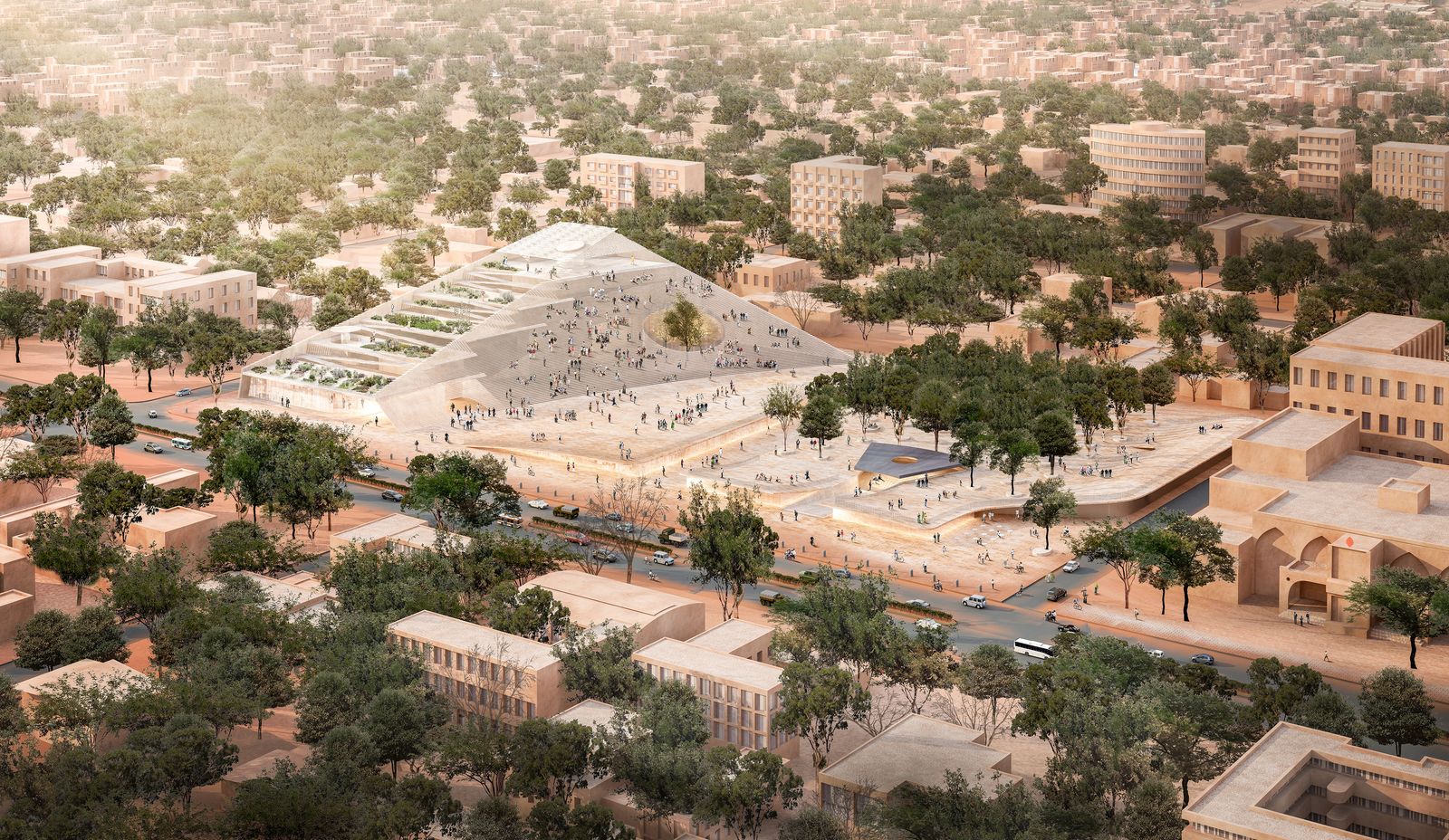
This project remains unbuilt, but Kéré describes it as a utopia that now “lives” in the minds of Burkinabe civic society.
“How could architecture be used to rebuild a relationship of trust between the people and their representatives?” he writes, describing this as the central question of the project that followed the 2014 uprising when the former National Assembly building was burnt.
Wanting citizens to “feel part of democracy, and of the nation”, he symbolically placed the public above the government in a stepped ziggurat structure, allowing people to climb onto the building itself and look out across the city. Its terraces are planted to help cool the building and form productive landscapes demonstrating agricultural techniques from across the country.


