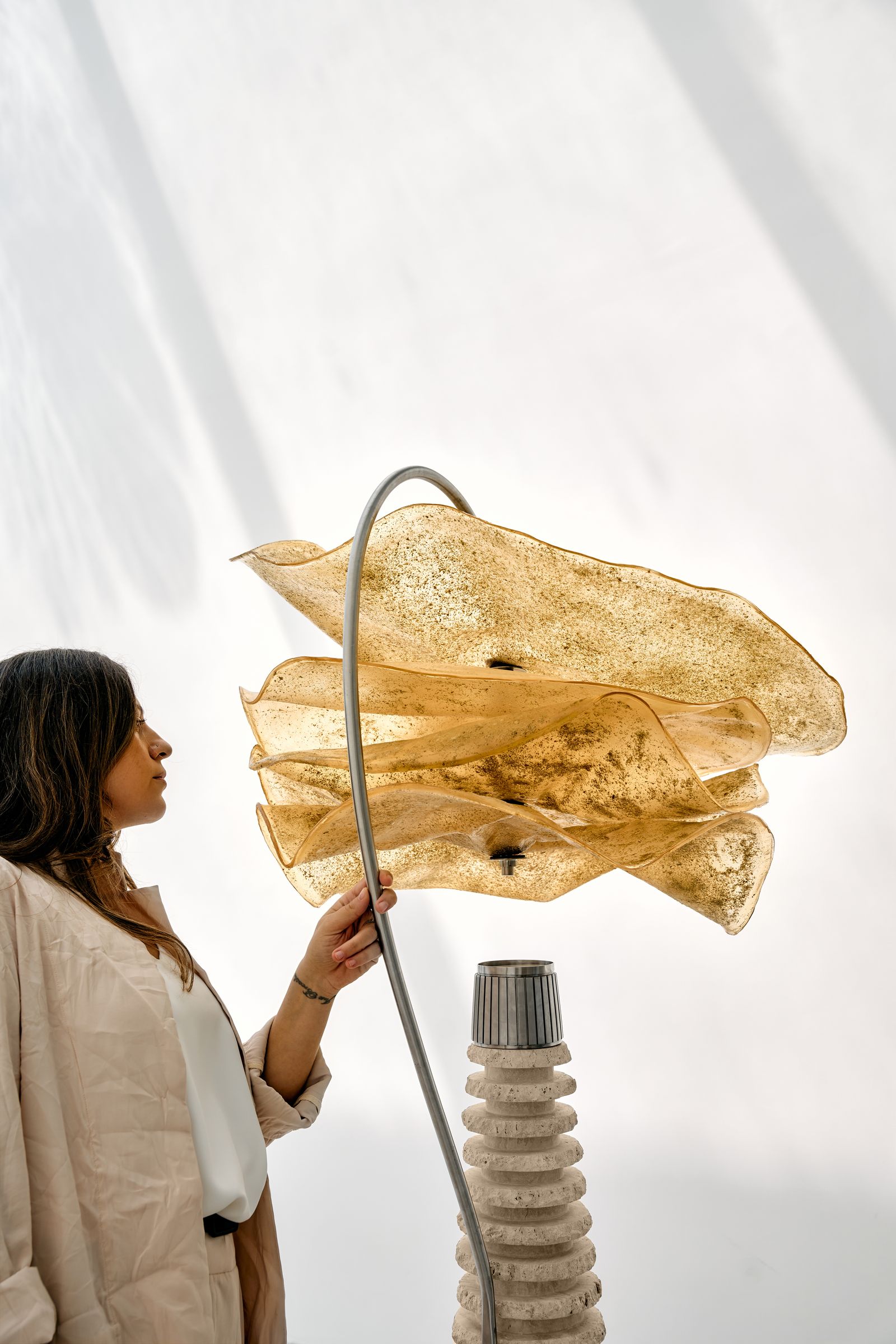

The Van Cleef & Arpels Emergent Designer Prize, in collaboration with Tashkeel – 11th Edition, has named its winner: Where There Is Uns by designers Joud Malhas and Rachel Antoun. Since its inception in 2013, the prize – organised by celebrated jeweller Van Cleef & Arpels in partnership with Dubai design incubator Tashkeel – has nurtured emerging regional talent, inviting participants to submit proposals for functional design pieces inspired by an annually changing theme. Over the years, the initiative has recognised talented designers from the region, each of whom has brought a distinctive vision to life through locally sourced materials and innovative craftsmanship.
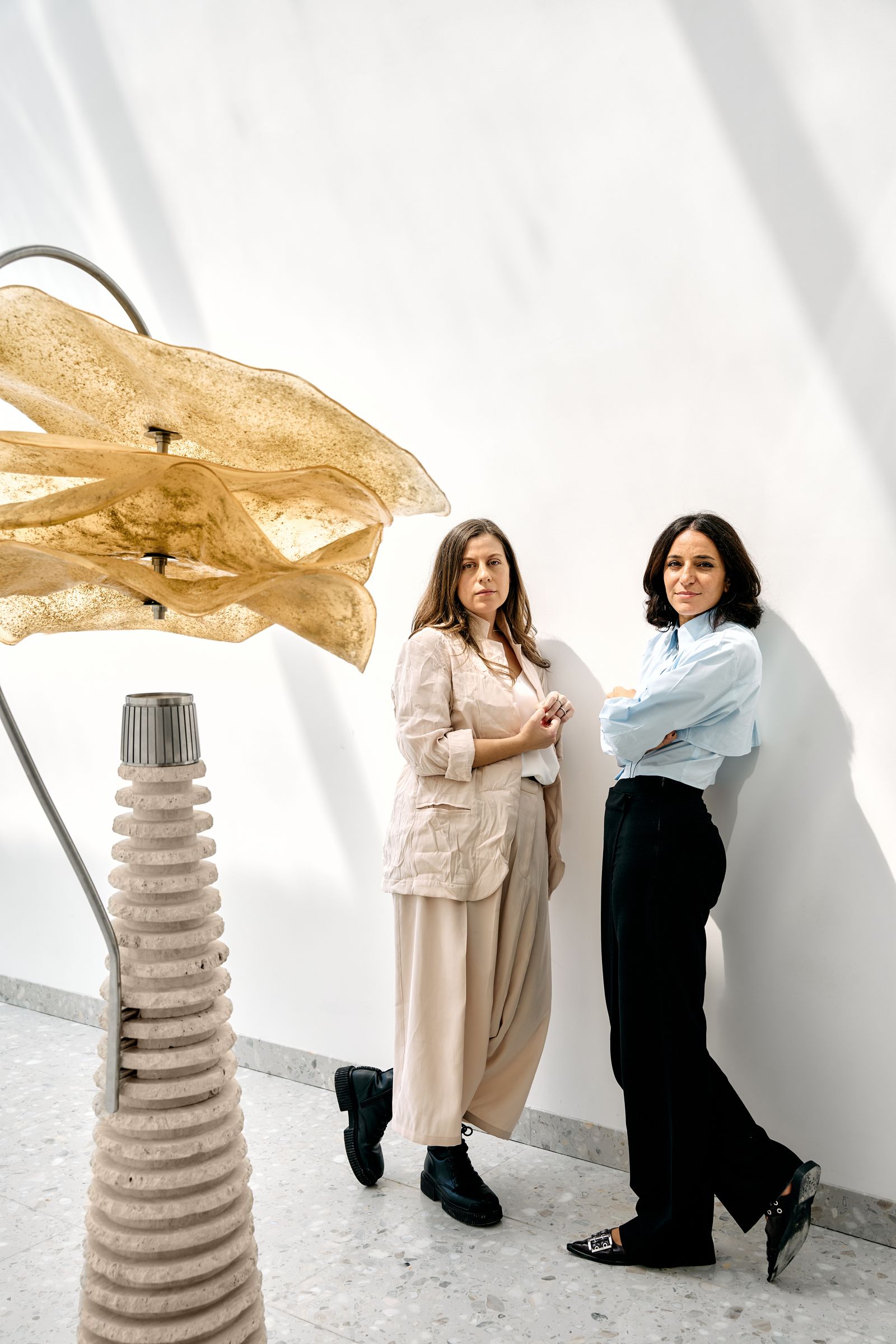
The most recent edition’s winners are Palestinian-Jordanian talent Joud Malhas and Lebanese creative Rachel Antoun for their lighting installation Where There Is Uns. The design is inspired by Gulf traditions and reimagines the Bedouin practice of lighting fires to welcome travellers with warmth, shelter and guidance.
Nurturing talent across the Middle East, the annual competition brings to life the visions of young creatives, inviting entries from the UAE, Saudi Arabia, Bahrain, Oman, Qatar and Kuwait. Each year, emerging designers are asked to submit proposals for functional products that embody a particular theme, with innovation and the use of locally sourced materials strongly encouraged. This time, the theme is Blooming Poetry, which explores design through emotion, history and local culture, foregrounding storytelling and sustainability.
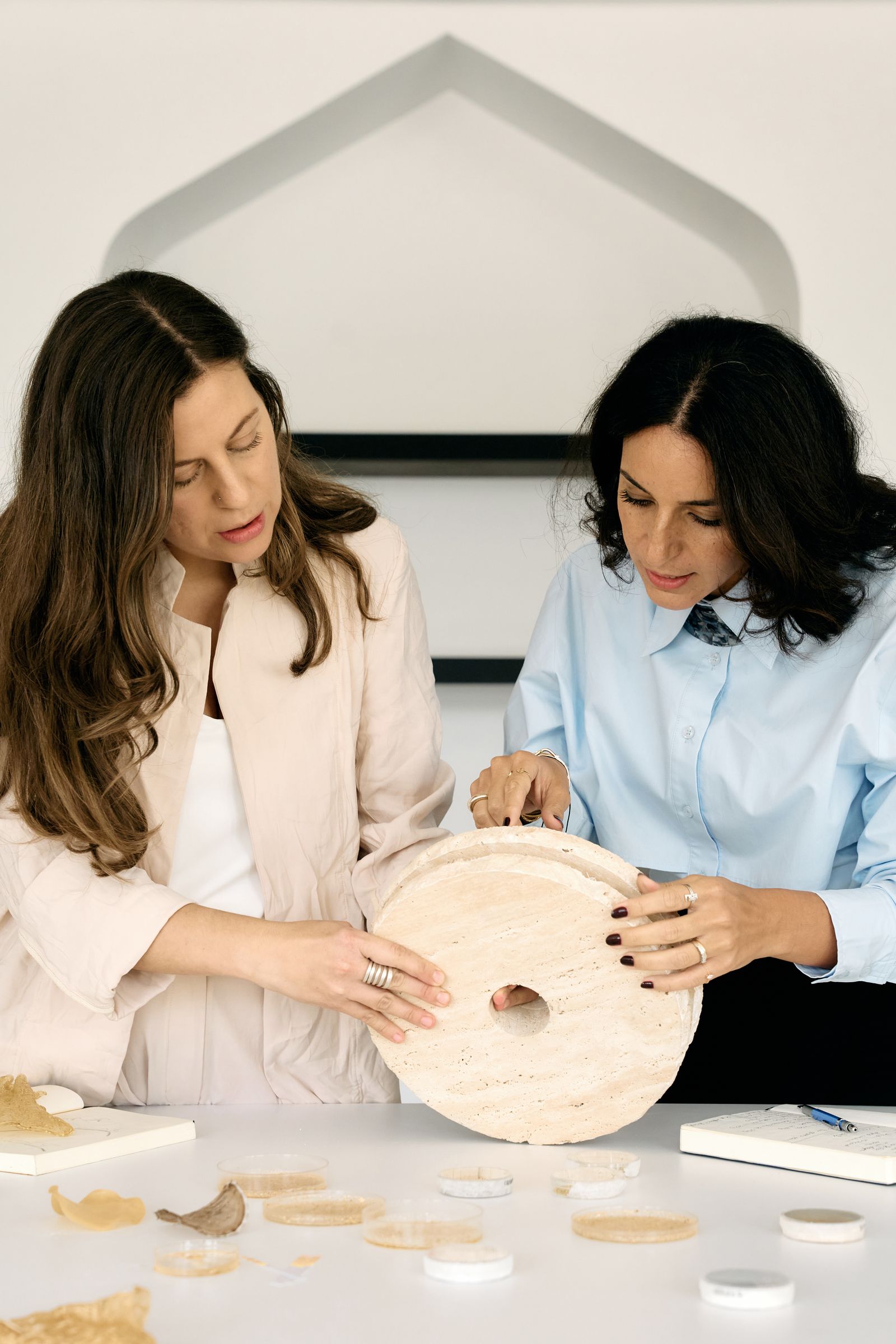
The winners were selected by a jury including gallerist Rossana Orlandi, interior designer Ammar Basheir and architect Carl Gerges. The panel also featured Salim Ahmed, Design Projects Supervisor at Tashkeel, and Editor Pratyush Sarup. As part of their award, the winning designers receive a commission to produce their design; prize money of AED 30,000 to cover production of the piece; and an immersive week-long trip to Paris to attend courses at L’ÉCOLE, School of Jewelry Arts — complemented by week-long courses at L’ÉCOLE, School of Jewelry Arts in the Middle East — an institute founded by Van Cleef & Arpels to share the jewellery world’s rich culture and technical mastery.
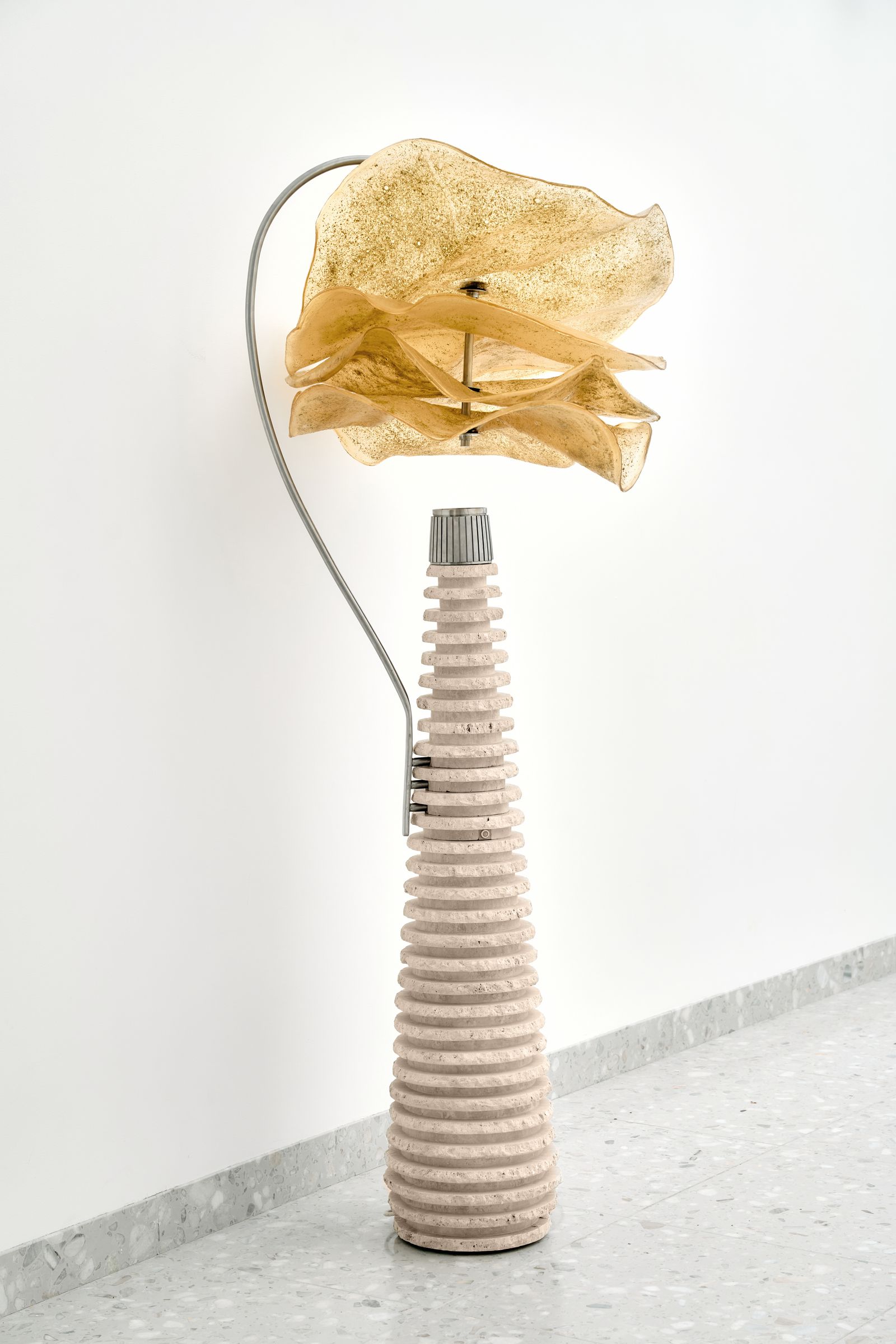
The winning design, Where There Is Uns, enchanted the jury with its thoughtful narrative and sensory impact. Developed collaboratively by Malhas and Antoun, the lamp draws inspiration from the works of poet Hamda Khamis, and serves as an invitation to pause, reflect and connect. A poetic response to the Arabic tradition of hospitality, its glow intensifies as onlookers approach – an effect achieved using infra-red sensors, evoking arms outstretched in a gesture of welcome.
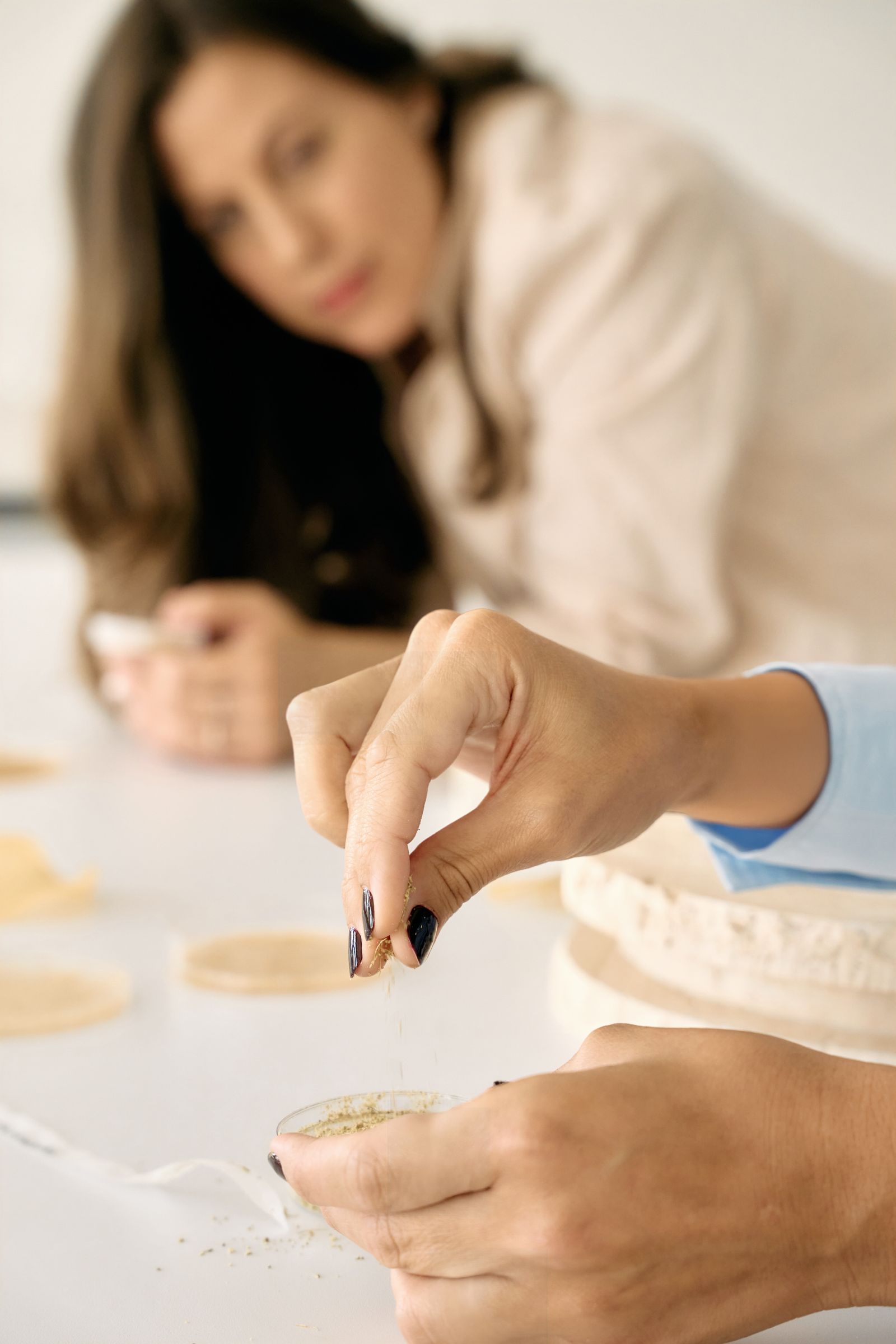
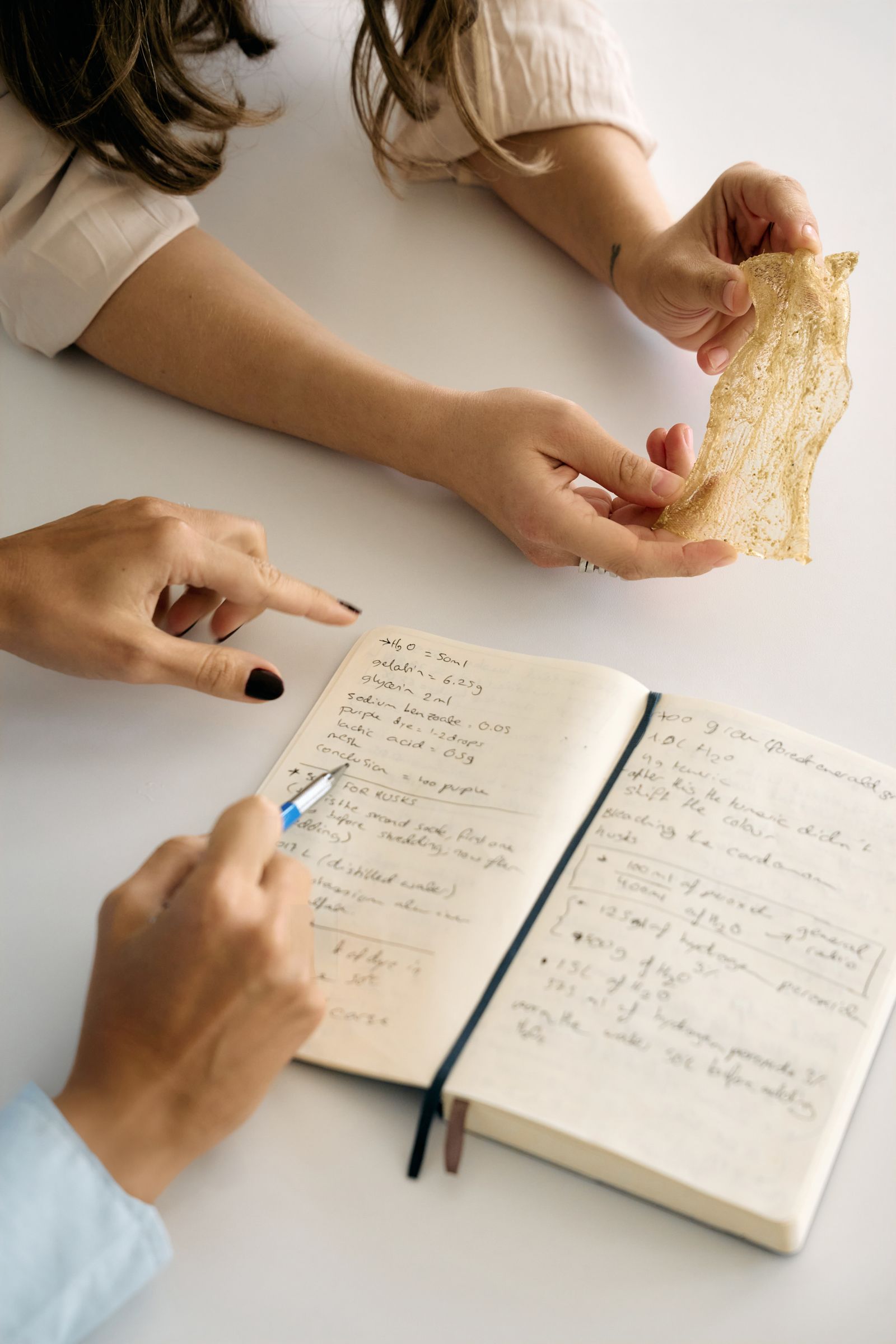
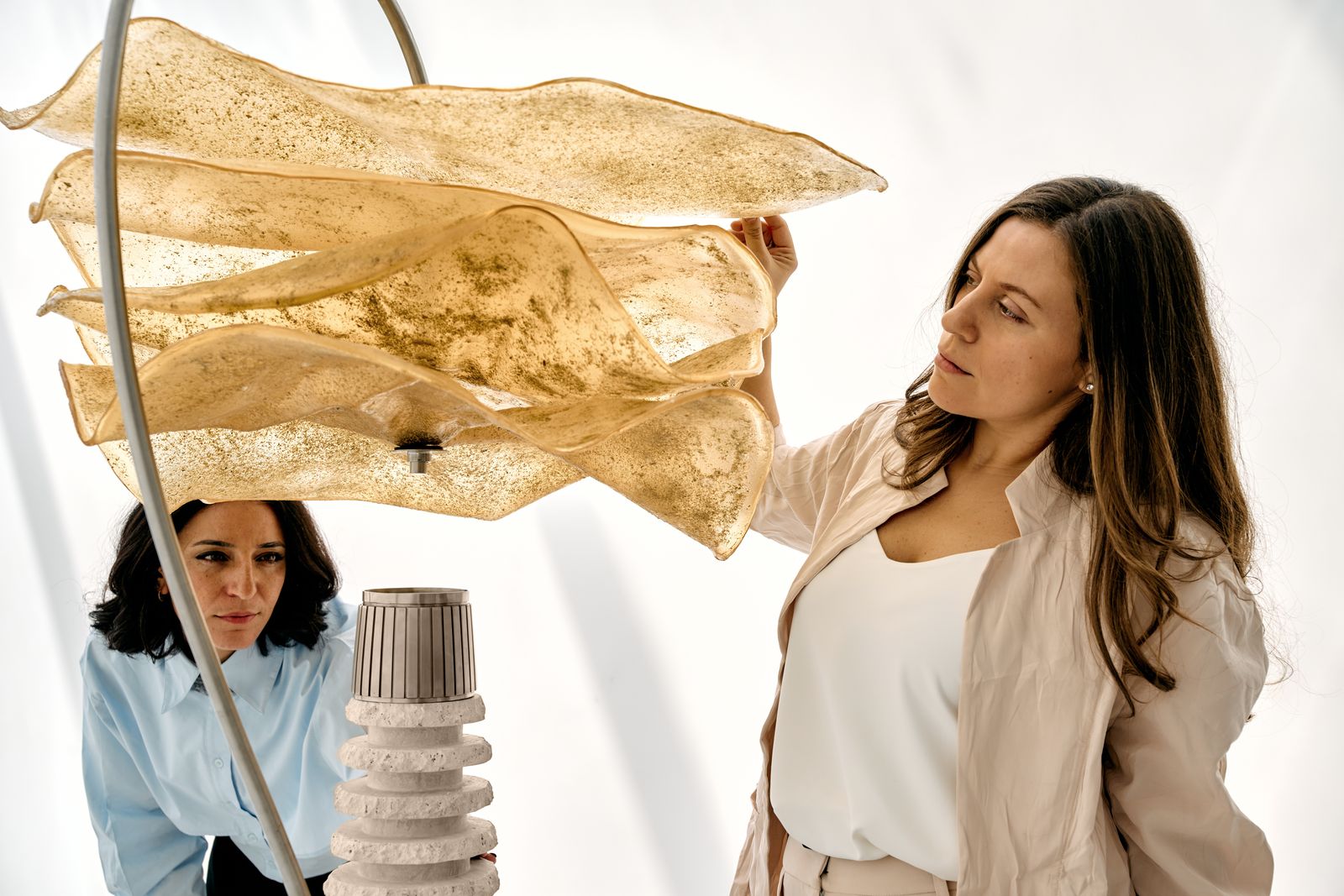
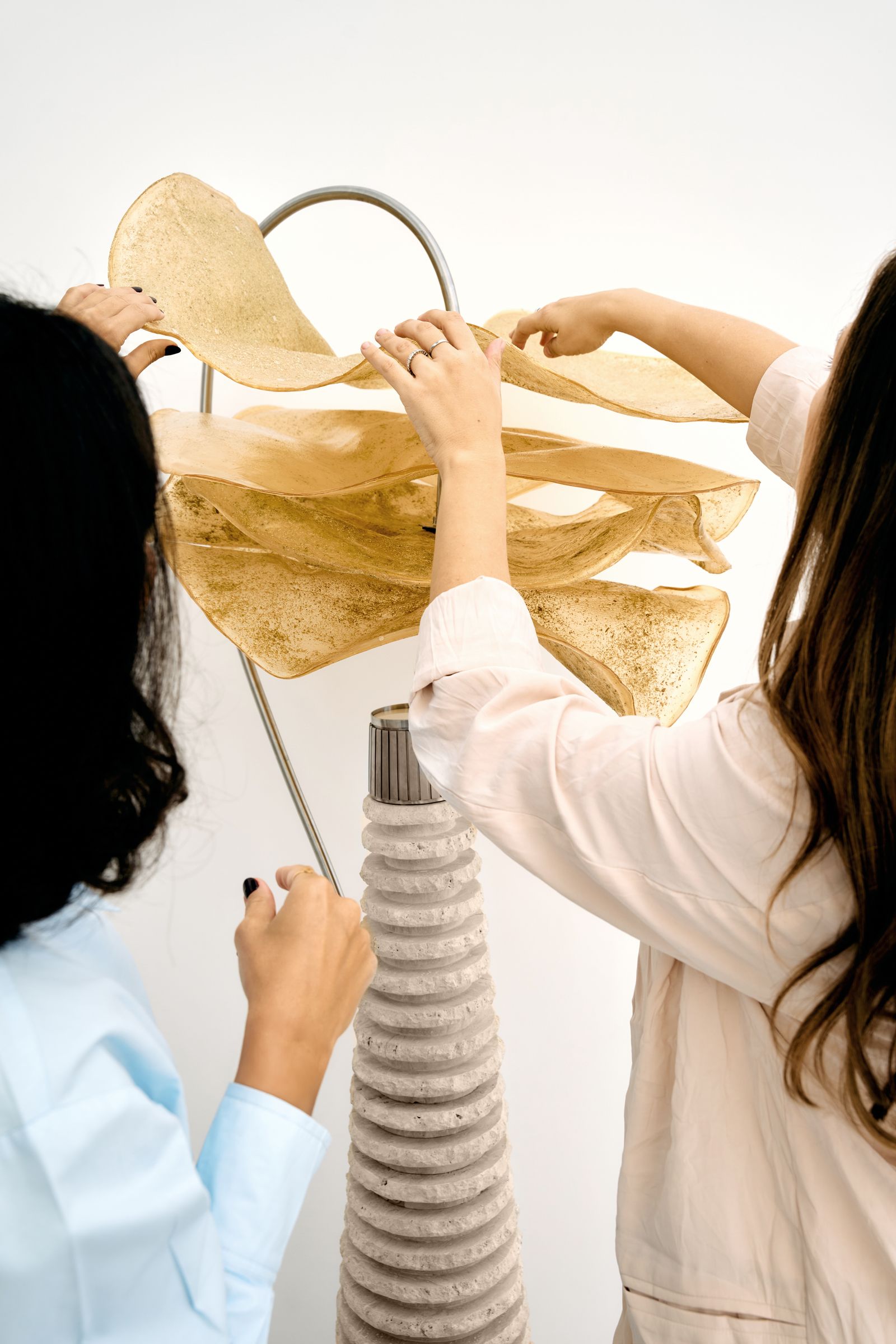
The design refracts light through bloom-like lampshades made of semi-transparent bioplastic sheeting, which warp freely and create an organic glow that symbolises nature’s untamed beauty. This sustainable material is made from discarded cardamom husks, in a nod to the traditional Arabic offering of coffee spiced with hail (cardamom).
The lamp is anchored by a travertine stem base crafted from offcuts sourced across the UAE, grounding the work in regional materiality. The bioplastic lampshades add refinement to the piece’s halo-like effect, while in place of a switch, a twist-activated dimmer mimics an unfurling cardamom leaf.
Here, Malhas and Antoun tell us more about their collaborative design process.
Tell us the story behind Where There Is Uns.
Joud Malhas: It was initially inspired by the region’s poetry, and by the poetry found in nature itself, particularly the unfurling of a leaf as it comes to life. From this idea, we began to imagine the leaf’s journey as it welcomes new life, and soon lingered on the notion of welcome and hospitality. The piece recreates the feeling of uns, an Arabic word that signifies warmth and togetherness, akin to the Nordic concept of hygge. We wanted the light to be a point of intimacy and conversation, drawing people toward its flame and inviting them to share quiet, meaningful moments beneath its glow. Our intention was also to give recycling and upcycling new meaning — to show that luxury can be born from renewal.
Rachel Antoun: From the beginning, we knew that we wanted to integrate a new bespoke material. While brainstorming which waste material to use, we fell in love with the idea of integrating cardamom husks into bioplastic - it tied in beautifully with the Gulf tradition of serving coffee spiced with cardamom, a symbol of hospitality and honour used to show guests respect. We decided to make this the protagonist of the piece, the element that carries our story. The piece was designed as two elements that depend on one another: a travertine base and a bioplastic “bloom”. Different in texture and weight, yet inseparable. One grounds, the other glows. The base, made from travertine offcuts with flamed edges, anchors the work, while the bioplastic’s natural warping brings softness and imperfection. Both elements serve as reminders of our own human nature.
What made you decide to work together?
RA: We started out as colleagues, and our relationship quickly evolved into a friendship that’s been going strong for over ten years. Even after we went our separate ways professionally, we always kept the design spark alive, constantly sharing projects, news or random ideas just to see what the other thought. So, when I came across this year’s Van Cleef & Arpels competition, in collaboration with Tashkeel, it immediately made sense to collaborate. We knew our different strengths would complement one another.
What does winning The Van Cleef & Arpels Emergent Designer Prize, 11th Edition, mean to you?
JM: It means a lot because it reminds me that taking the slower, more thoughtful route is still worth it. These days, everything moves so fast, but Where There Is Uns was built on patience, on trial and error, and on trusting the process. The experience also reinforced how collaboration can open new perspectives. It made me want to keep surrounding myself with people who challenge and expand the way I think and make.
RA: We’ve grown a lot through this experience. I’ve begun experimenting more with material design — thinking about reuse more closely, and exploring new applications.
What is your design philosophy, as reflected in Where There Is Uns?
JM: My design process is rooted in the belief that design is human - a dialogue between people, place and time. I see space as a living organism that breathes culture, emotion and memory. I’m drawn to the vernacular of the Arab region — its courtyards, wind towers, textures and gestures — but I approach it through a contemporary lens. I believe in material storytelling: that a surface, a scent, or the way light moves across a wall can evoke memory as deeply as words do.
The aim is always the same - to create spaces that invite presence and connection.
RA: I have an issue with designing things that don’t have purpose. Where There Is Uns represents that completely. Every decision, from the storyline to the material choices to how the lamp interacts with the person approaching it, was made with intention. Even its imperfections were part of the concept. It’s a reminder that nature, like us, is unpredictable, yet somehow everything still comes together in harmony.
How are you hoping to use your time at L’ÉCOLE, School of Jewelry Arts in Paris?
JM: I was actually part of the design team for L’ÉCOLE’s first and second editions in Dubai, held at the Hai d3 space - long before the school opened its permanent space in Dubai Design District. I worked behind the scenes, helping to set up the exhibitions and gaining a deeper understanding of the school’s ethos. It will be a true pleasure to experience it first hand at its original campus — observing the jewellers and craftsmen at work, and immersing myself in a different design discipline that is equally intimate, precise and poetic.
RA: I’m looking forward to understanding how things are made at that level of precision. There’s a certain poetry in how jewellers work; the patience, the repetition, the way every millimetre and reflection of light is deliberate. I want to observe that mindset closely and see how it can translate into my own way of designing. It’s not just about learning new skills, but about reconnecting with a slower rhythm of making, one that values time, care, and touch. My hope is to carry that sensitivity back into my work.